No products in the cart.
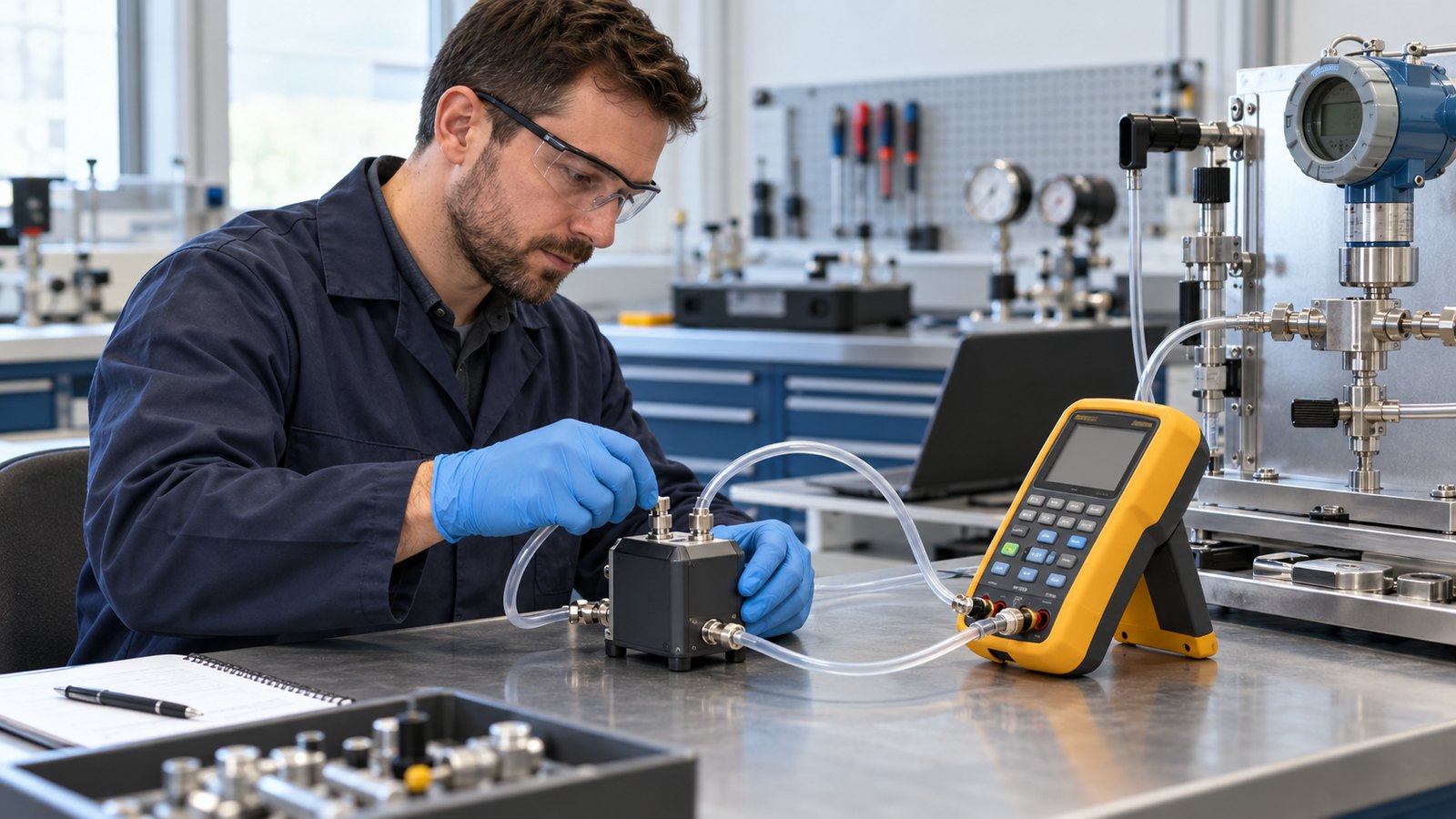

Illustrative image: AI-generated; not a photo of the Fluke 750PD3.
Accurate low-pressure measurement is essential when calibrating instruments used in process control, HVAC service, maintenance, and laboratory work. The Fluke 750PD3 pressure module is designed to add low differential-pressure measurement capability to compatible Fluke calibrators, with a range suited to applications around ±5 psi.
For specifications and purchasing information, visit the Fluke 750PD3 product details page.
The Fluke 750PD3 is a differential pressure module for use with compatible Fluke 740 and 750 Series calibrators, as well as compatible 720 and 710 Series instruments. Instead of relying on a single fixed pressure unit, technicians can select a pressure unit on the compatible calibrator to match a procedure, work instruction, or reporting requirement.
This pressure range can be relevant when verifying low-pressure transmitters, pressure switches, gauges, and other instruments whose operating points fall within the module’s stated limits. In HVAC and building-services work, low differential pressure can be important for checking filters, airflow systems, and duct pressure. In industrial maintenance and process-control environments, a pressure module can help technicians compare an instrument under test against a traceable reference as part of a documented calibration procedure.
Always confirm the instrument’s required range, media compatibility, connection type, and calibration procedure before selecting a module. The 750PD3’s listed range is ±5 psi; it is not a substitute for a higher-range module when the application exceeds that limit.
Connect the module using the appropriate included adapter, select the desired pressure unit in the compatible calibrator’s setup, and follow the calibrator and instrument manufacturers’ instructions. Allow the equipment to stabilize under the conditions required by your procedure, check the connection for leaks, and record the module’s serial number and certificate details in your calibration records. For critical work, verify the certificate status and applicable uncertainty requirements before use.
If your work calls for low differential-pressure measurements within the ±5 psi range and you already use a compatible Fluke 740, 750, 720, or 710 Series calibrator, the 750PD3 may be a practical way to extend your setup. Review the full specifications and compatibility details before ordering.
For complete pressure range and media specifications, see the official Fluke 750P Series documentation. View the Fluke 750PD3 product details or contact Asia Multimeter to discuss your calibration requirements.
Leave a comment